
About
How it Started
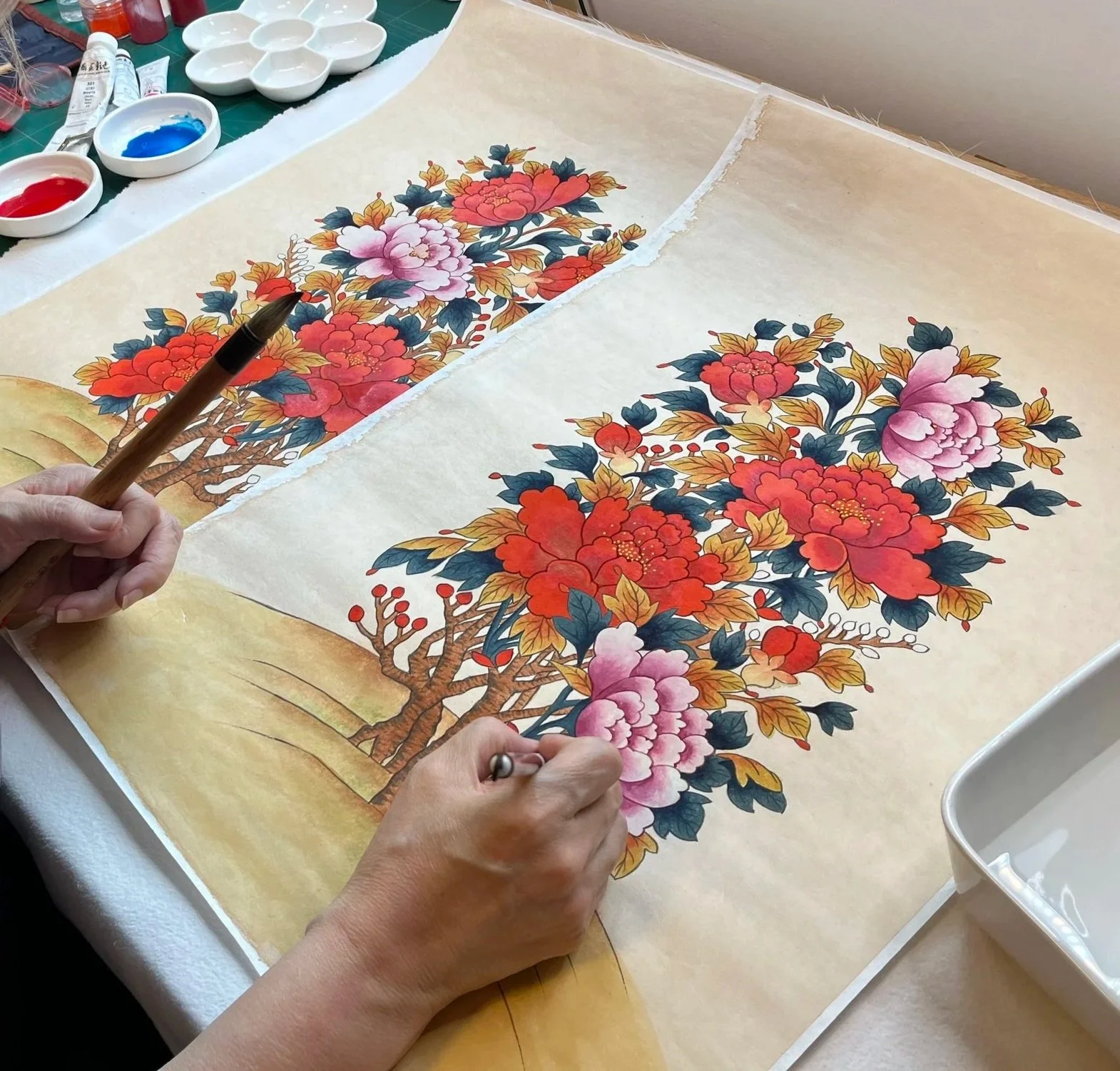
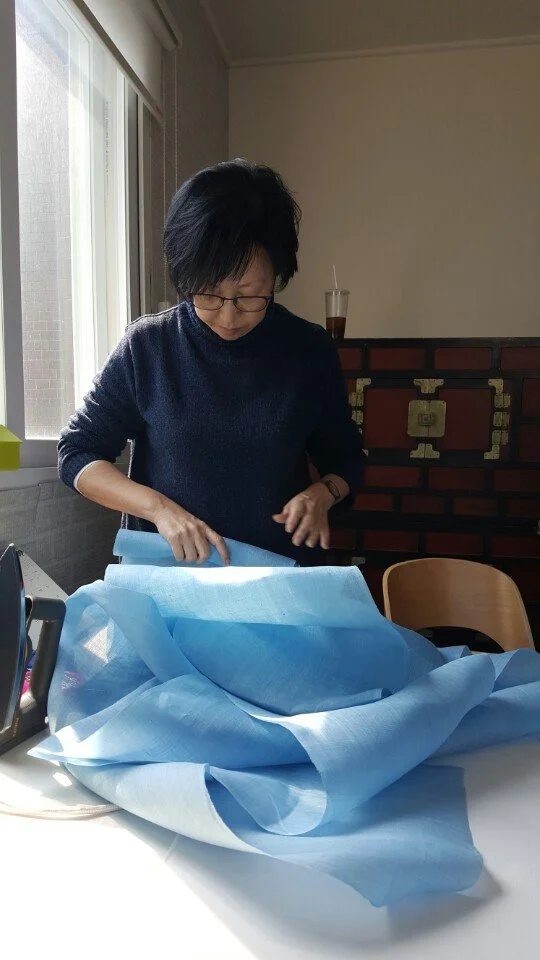
I am a designer by training and a diplomat’s wife by marriage. Throughout the years, I’ve lived in many different countries, including the US, UK, India, Thailand, Iraq, Ireland, Australia, etc. This nomadic life meant constantly meeting new people and decorating new homes. I was always in need of gifts and decor items that were distinctly Korean.
But why was it so difficult to find something that didn’t look like it came from a souvenir shop or museum store? Out of sheer frustration, I started learning Korean fabric art and folk painting to create my own pieces. What began as a practical need turned into a passion. I am now venturing out to share this passion with others.
The Name “Studiolo Seoul”
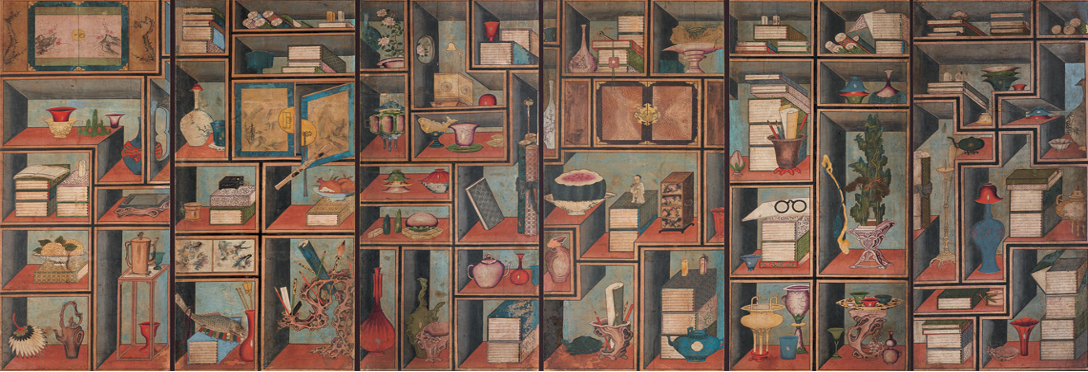
The first scarf I created in 2022 was inspired by a folk painting called chaekgeori (“the scholar’s books and possessions"). Later, I came across a fascinating article on chaekgeori. (learn more)
It all started in 15th-century Europe, where international trade and exploration motivated rich families to collect treasures and objects from other continents. In the grand mansions of prominent families, a room was set apart to display these rare possessions. In Germany, this room was called wunderkammer, or “wonder-room.” In Italy, it was called studiolo, or “cabinet of curiosities.” In these rooms, which the master of the house used for rest and contemplation, trompe-l’oeil mural paintings of exotic objects from faraway lands adorned the walls.
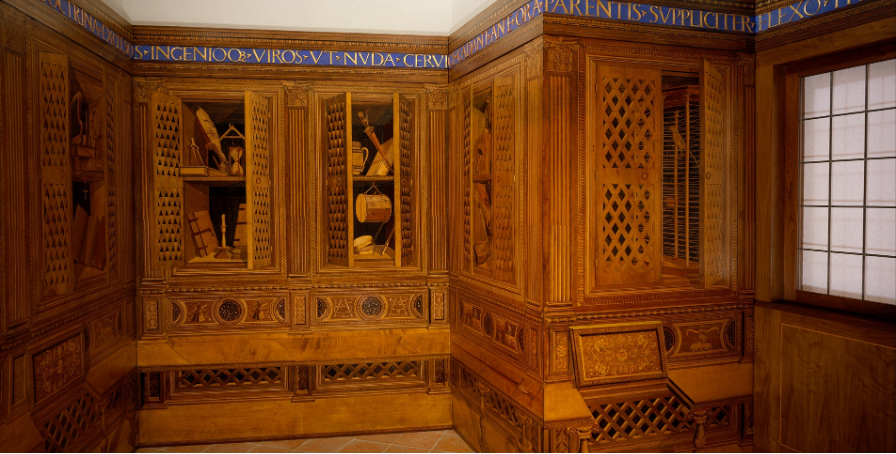
These studiolo paintings were taken to Qing China by Jesuit missionaries and eventually transmitted to Korea, where the royal court received them with much enthusiasm. Combined with Korea’s reverence for scholars, the art of studiolo evolved into chaekgeori or chaekgado. (The two terms are slightly different: chaekgado has shelves and chaekgeori doesn’t.)
It was a fascinating story. Chaekgeori was a product of the East-West exchange of culture, technology, and ideas, including Christianity, Confucianism, and materialism. It is truly eclectic, which is an apt description of our modern-day lifestyle. And thus, the name “Studiolo Seoul.”
Minhwa, The Korean Kaleidoscope
Chaekgeori belongs to a broader genre of painting called minhwa, which literally means “paintings of common folks.” It was called so to distinguish it from the black-and-white inkbrush paintings favored by the upper-class scholars of Joseon Korea. Although chaekgeori is my main source of inspiration, minwha provides a vast range of motifs, including flowers, insects, silk patterns, furniture, and even mythical animals.
Minhwa started with paintings sold in the marketplace to commoners who believed it would bring them good fortune, money, and children. But it also included more refined paintings for the noble class - paintings depicting social status and scholarly accomplishment. And finally, there were magnificent paintings for royalty, including screens for the queen’s room and sun-moon paintings placed behind the throne. These artworks symbolized royal authority and wishes for the longevity of the monarch.
But what really distinguishes minhwa is the unapologetic use of colors. Unlike the reserved palettes of traditional paintings of the East, minhwa artists used a whole array of vibrant as well as muted colors. The artists also didn’t care about being realistic. Instead, minwha paintings are full of surprise, nonchalance, and boldness that convey spirit and energy. This is the essence and magic of minhwa.
If you want to know more about minhwa, go to https://koreanfolkart.org/ or https://koreanfolkart.org/blogs/minhwa.